




NFT art is often discussed through technology and markets, but for many artists it begins somewhere simpler: with illustration.
Before a digital artwork becomes an NFT, it usually exists as an image, a drawing, or a visual concept. For independent illustrators, NFTs can function as an additional format for presenting artwork — similar to how posters and prints translate drawings into physical objects.
This relationship between illustration, posters, and digital editions helps explain why many artists treat NFTs as part of a broader creative practice rather than as a separate medium.
Illustration Before the Blockchain
Most NFT artworks begin long before they appear on a blockchain. They start as illustrations, sketches, or visual experiments.
Artists working in surreal or symbolic imagery often develop their ideas through drawing first. The image itself carries the meaning, atmosphere, and narrative structure. Technology simply provides another way to distribute that image.
This process is similar to how illustrated posters are created. The artwork is produced independently, then translated into a format that allows it to reach collectors.
You can explore Sotuland’s poster collection here: All posters
Posters as Physical Art Editions
Posters have long served as one of the most accessible ways to collect illustration-based art.
A well-designed poster allows an artwork to exist outside galleries while preserving its visual structure. Strong contrast, clear composition, and symbolic imagery make illustration particularly effective in poster form.
Sotuland’s illustrated posters follow this approach, presenting surreal and symbolic artwork as everyday art objects.
Explore examples in the poster collections:
-
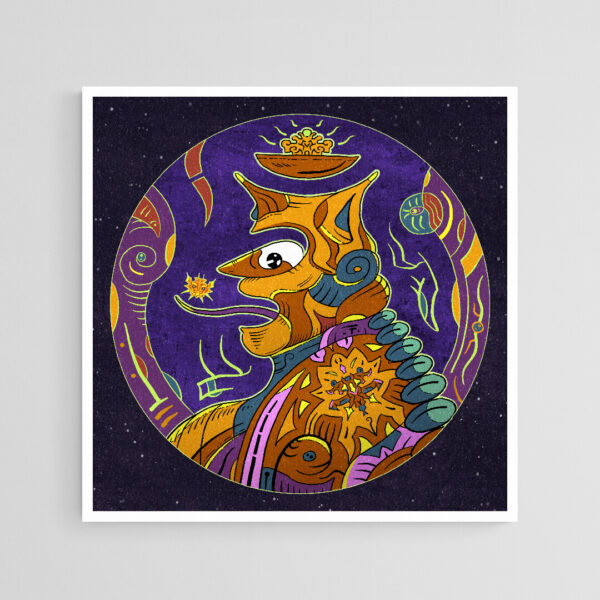
-
God Krahhin – Art Poster
- Price range: €18.00 through €27.50
-
-
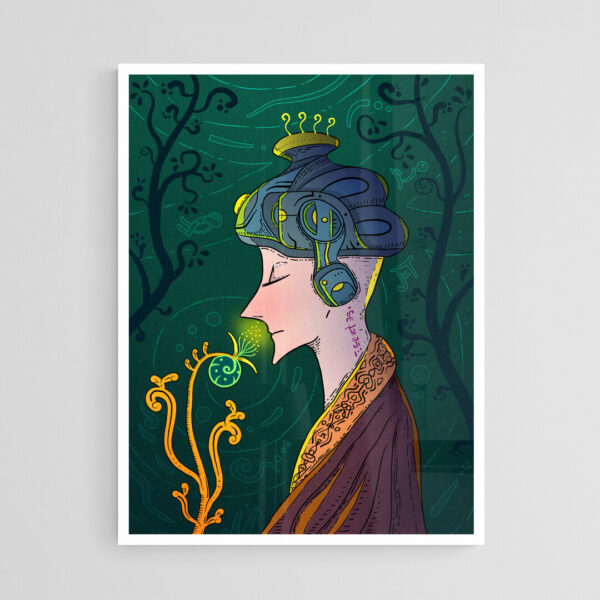
-
Flower – Art Poster
- Price range: €24.50 through €29.00
-
-
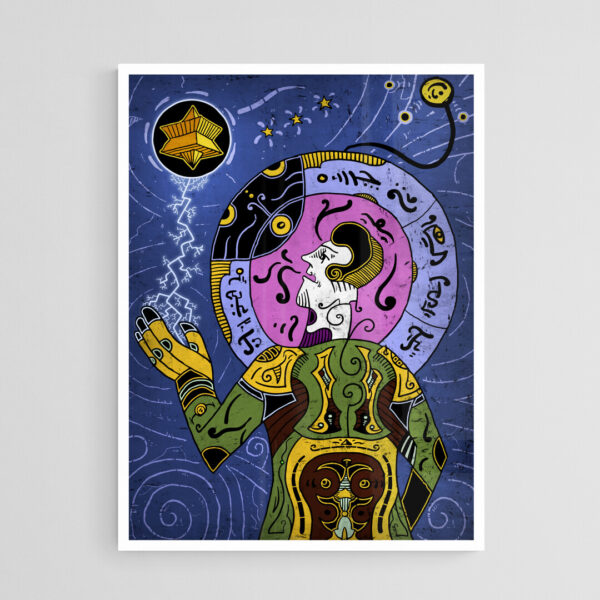
-
Incal – Art Poster
- Price range: €24.50 through €29.00
-
NFT Art as a Digital Edition
NFTs introduce a different format for presenting illustration. Instead of printing artwork on paper, the image is recorded as a digital edition.
For many artists, NFTs function similarly to limited prints or poster releases. The artwork itself remains the central element, while the NFT acts as a certificate that establishes provenance and ownership.
In this way, NFTs extend the same idea that posters already embody: making artwork available beyond a single original piece.
Some of Sotuland’s illustrated works are also released as digital collectibles on the Tezos blockchain. You can explore the collection here: Objkt.com
From Wall Art to Digital Collectibles
When an illustration becomes both a poster and an NFT, the artwork moves across formats without losing its identity.
The same surreal or symbolic composition can exist as:
- a framed poster on a wall
- a digital collectible in an online collection
- part of a broader series of illustrated works
This flexibility allows artists to build visual worlds that extend across physical and digital spaces.
-

-
The Great Eye – Black & White Art Poster
- Price range: €17.00 through €25.00
-
-

-
Totem – Black & White Art Poster
- Price range: €17.00 through €25.00
-
-

-
Wind Whisperer – Black & White Art Poster
- Price range: €17.00 through €25.00
-
Illustration as the Core Medium
Despite the technology involved, NFT art still depends on strong visual ideas. Without a compelling illustration, the format itself offers little meaning.
Artists working in surreal and symbolic styles often translate well into NFT formats because their imagery is visually distinctive and concept-driven.
These qualities also define many illustration-led art prints and wearable artworks.
You can see how illustration extends into wearable design in Sotuland’s art t-shirt collection.
Conclusion
NFTs represent one more way for artists to share illustration with collectors. Rather than replacing traditional formats, they expand the ways artwork can exist.
Posters bring illustration into physical spaces, while NFTs allow the same imagery to circulate digitally. When both formats grow from the same artistic practice, they form a coherent body of work rather than separate mediums.
For independent illustrators, this continuity between posters, prints, and digital editions helps keep the focus where it belongs — on the artwork itself.